Biodiversity hotspots
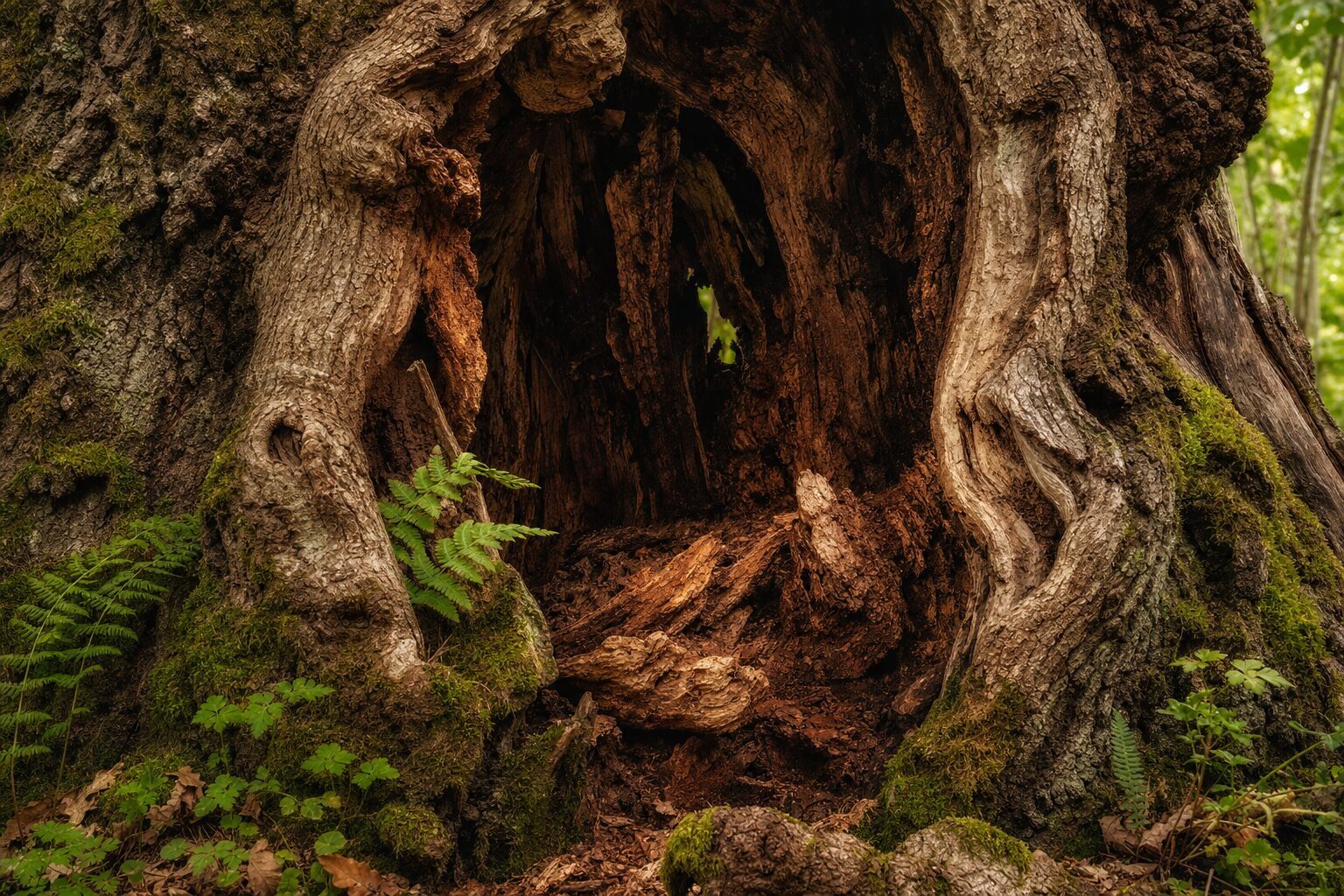
Cavities, cracks and deadwood are home to saproxylic insects, bats, birds, lichens and fungi — many of them threatened and dependent solely on old trees.
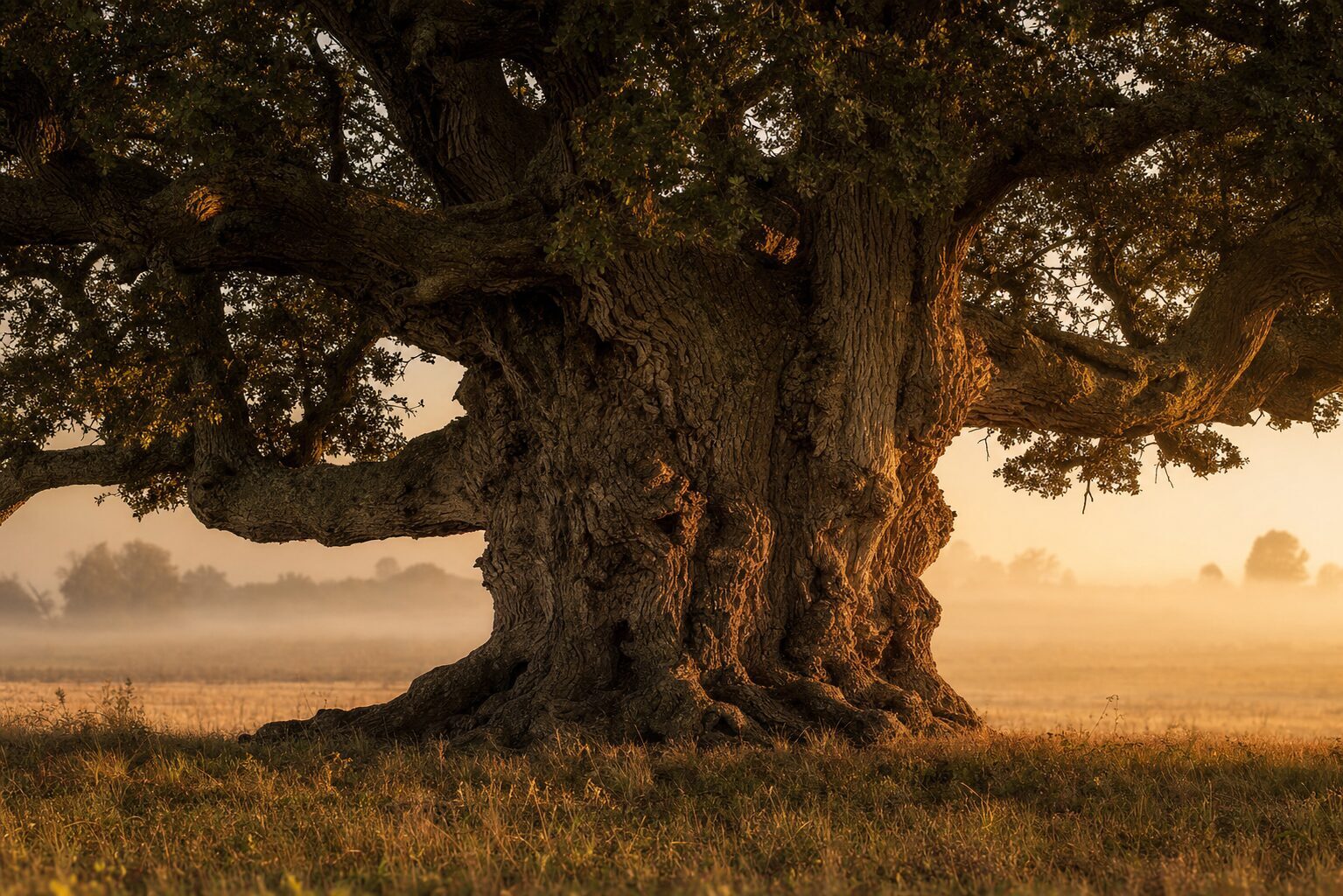
Veteran trees are living history books and the richest habitats in our landscape. Discover what they are, how they form, and why we must protect them.
A veteran tree is one that shows the features of age — regardless of how old it actually is. These characteristics may come from years, but also from injury, management, or the conditions in which the tree has grown.
Unlike the term “ancient tree”, which refers strictly to a tree that is very old in years, a veteran can be any age. All ancient trees are veterans — but not all veterans are ancient.
Three key features give them away: a low, wide, squat shape as the crown retrenches with age, a wide trunk compared with others of the same species, and hollowing of the trunk that may not always be visible.
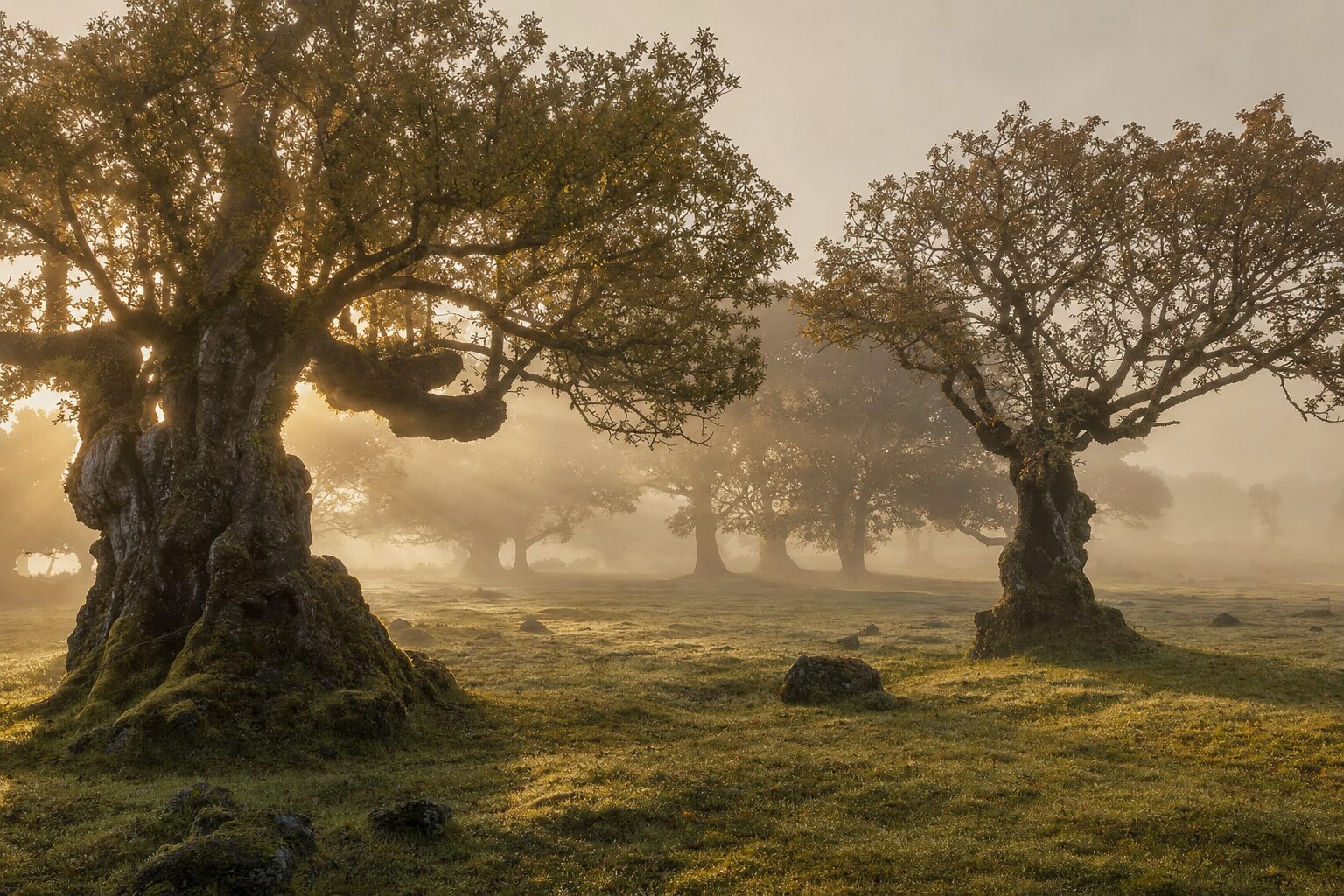
“Ancient trees link us culturally and historically to past generations of people who lived among them.”
A single old tree can outweigh an entire young plantation in ecological value. Here is why.
Cavities, cracks and deadwood are home to saproxylic insects, bats, birds, lichens and fungi — many of them threatened and dependent solely on old trees.
Veterans have locked carbon into their mass over decades and centuries. Old trees keep storing it and regulate the microclimate around them.
Veteran trees are living links to the past — landmarks, witnesses to history, and part of the identity of landscapes and communities.
Their growth rings and physiology record centuries of climate and environmental change, making them invaluable to science.
Trees do not age the way we do. Across its whole life a tree passes through a recognisable sequence of morpho-physiological stages — from seed to ancient veteran — first described by Raimbault (1995) and carried into arboricultural practice by Fay and colleagues. Understanding these stages is the foundation of good care for old trees.
The stages are not strictly linear: a tree can repeat earlier developmental patterns within itself (reiteration), so an ancient tree carries both the old and the new at once. (Raimbault, 1995; Hallé, 1999.)
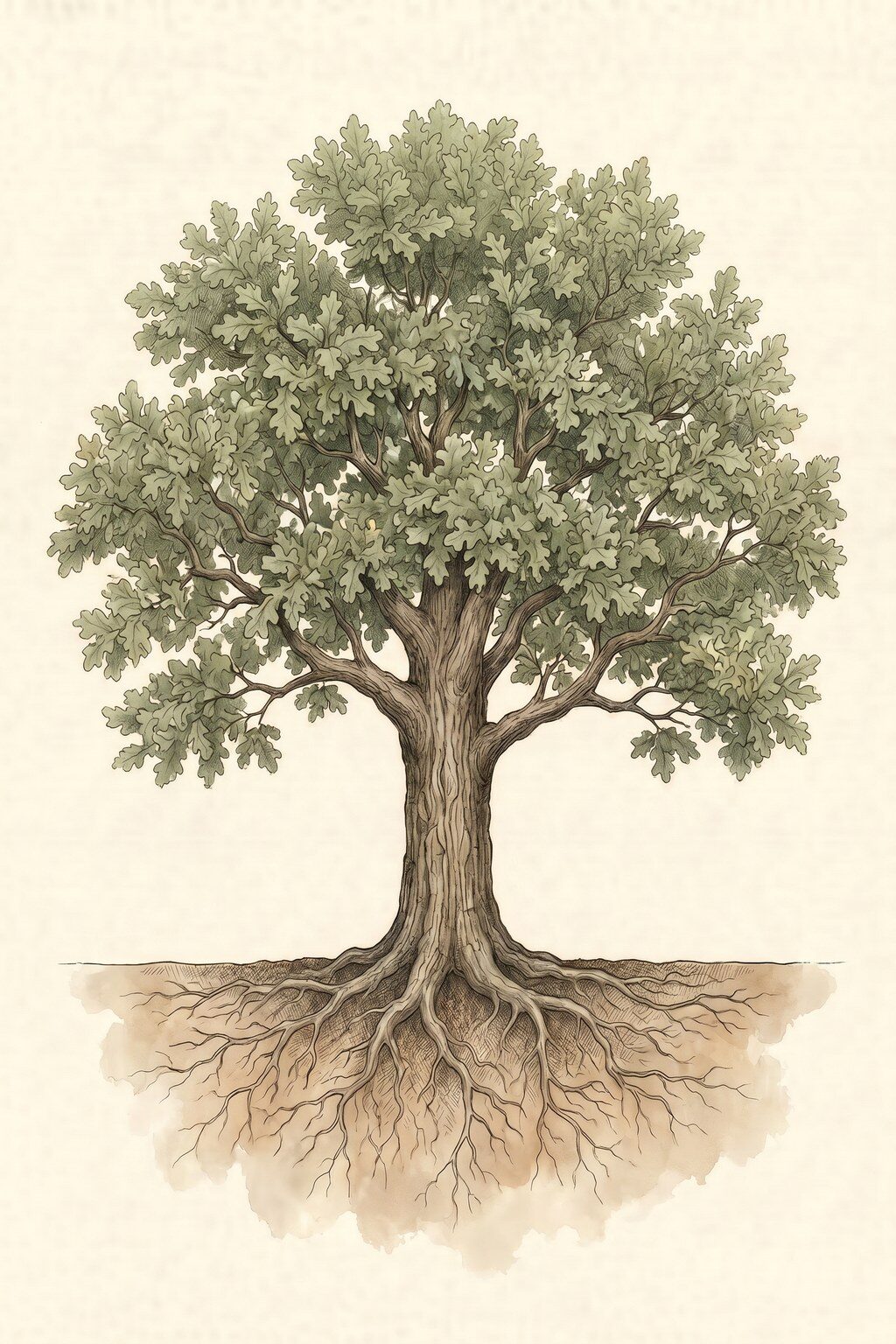
In the young phase the tree invests energy in height and crown surface under apical dominance, while the simple root system spreads and branches. Towards the end of Stage 4, apical dominance wanes and branches begin to act more independently.
In the mature phase the crown rounds out and reaches its largest size. Lower and inner branches are shed naturally (the “umbrella effect”), the root system becomes tiered and woody, and the first fungi begin to break down heartwood from the base of the trunk.
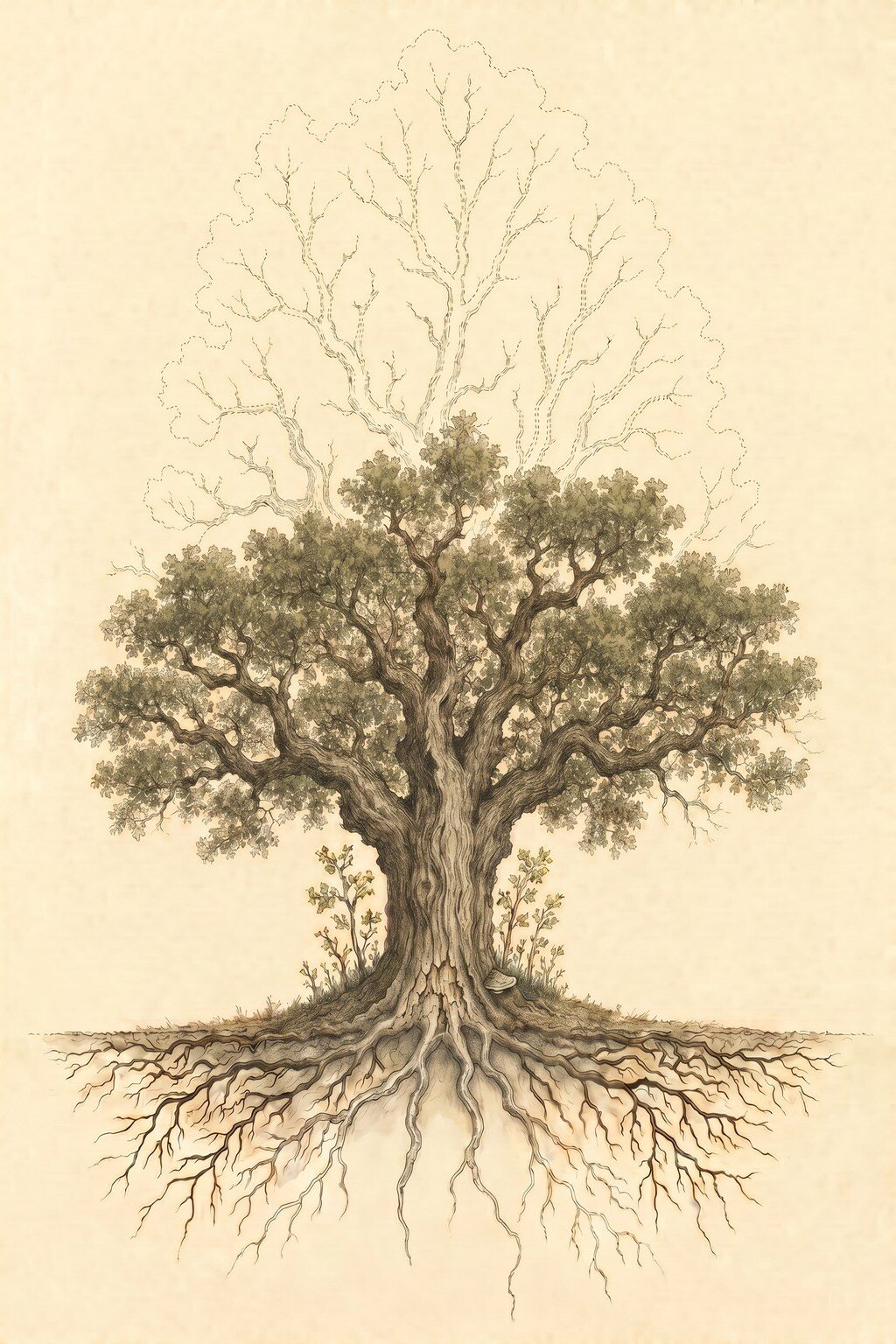
When the roots can no longer supply a wide crown, the tree gradually reduces it. The outer, upper branch tips die back (shown in the illustration as the ghost of the former crown), while new, more vigorous growth sprouts lower and closer to the trunk.
This is not decline but a survival strategy: a lower crown is more mechanically stable and physiologically efficient. It is precisely this natural process that arborists imitate when carrying out retrenchment pruning on old trees.
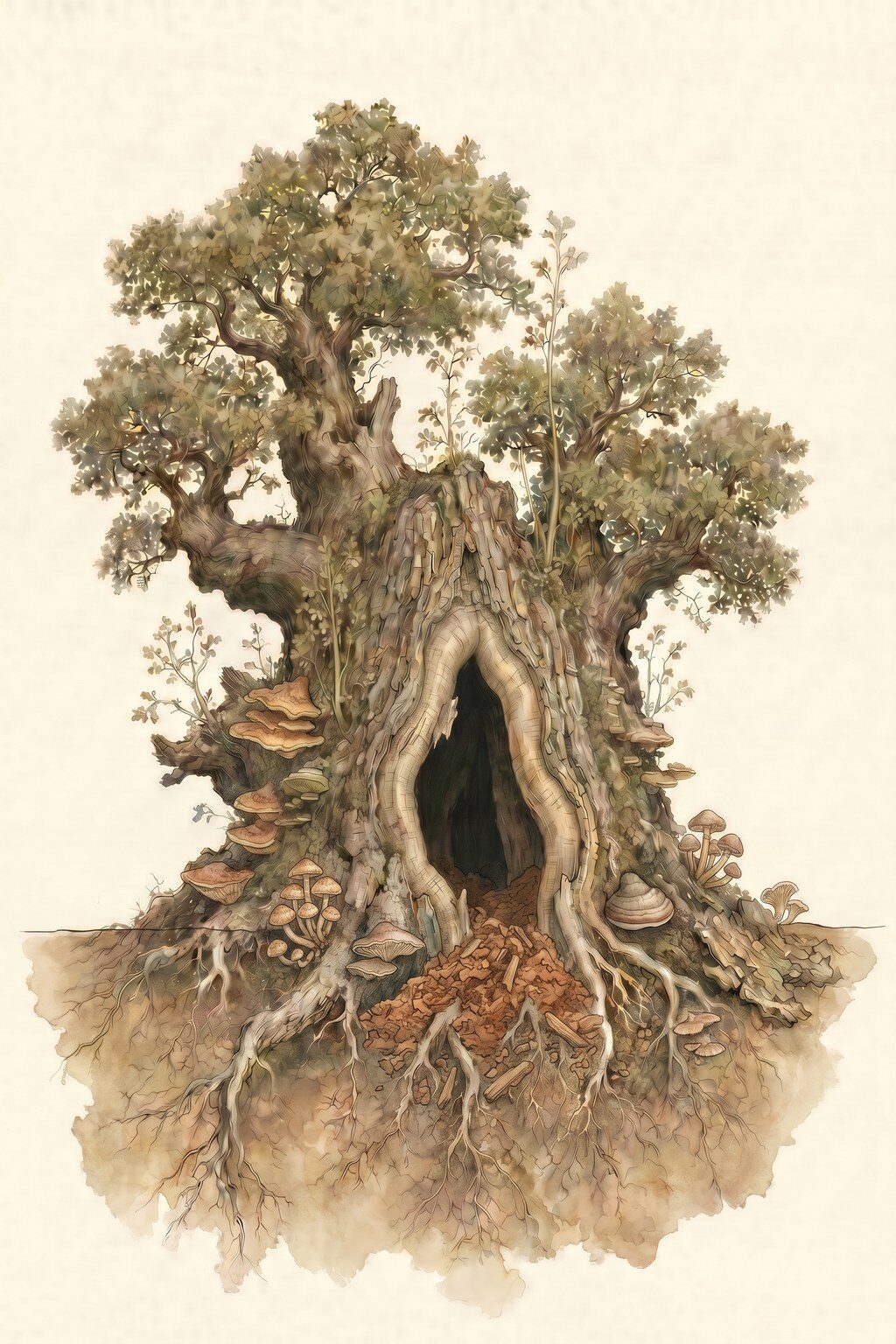
Fungi break down the heartwood and ripewood, hollowing the trunk. In doing so the tree recycles its own nutrients, sheds weight and creates saproxylic habitat. This “centripetal” decay (from the centre outward) does not threaten the living, outer conductive sheath.
From dormant and adventitious buds, reiterative shoots emerge — new “mini-crowns” that renew the tree. This is its life-insurance system: a “second chance” to grow out of its own body.
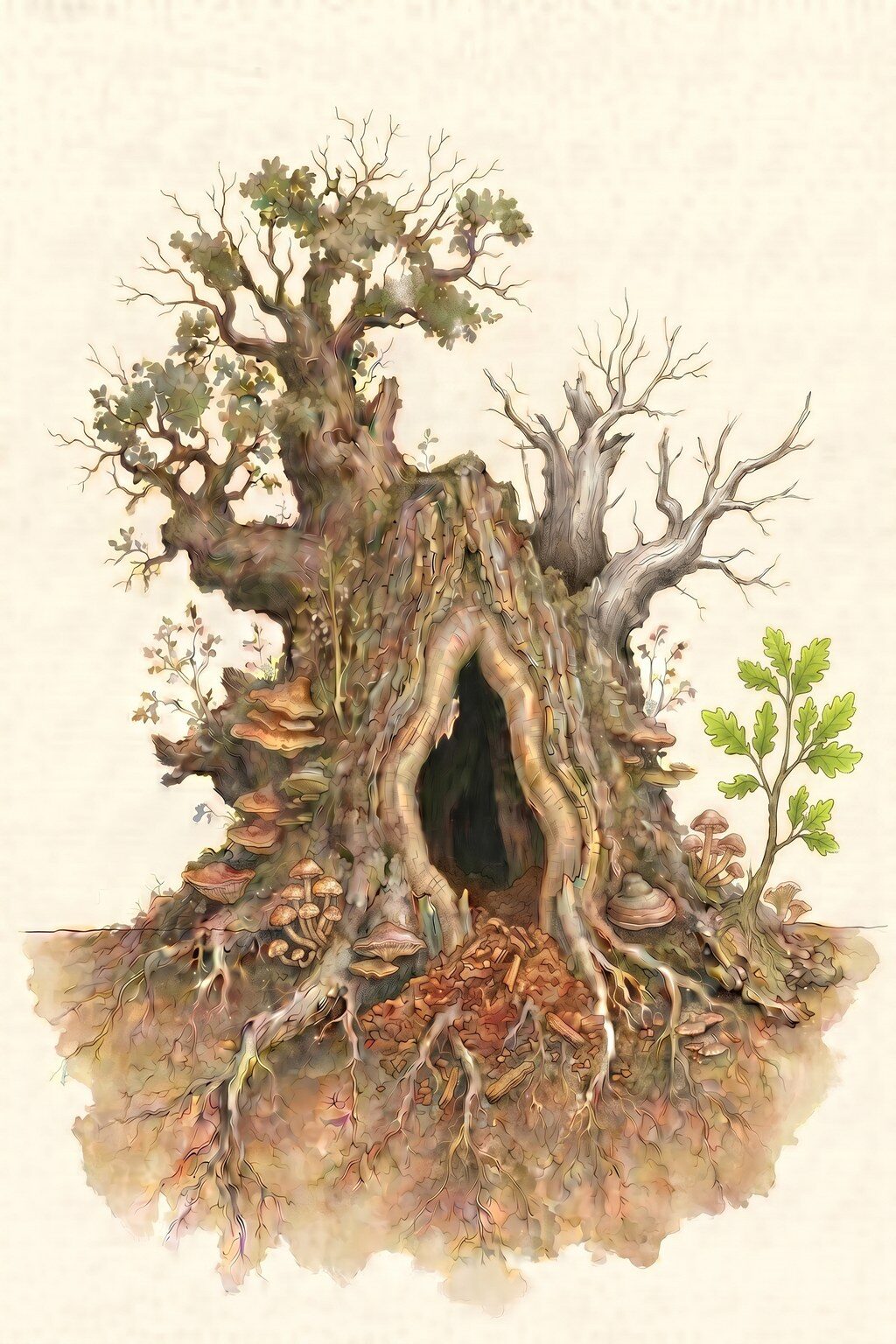
In the final stage the tree may enter terminal decline. But ageing in trees is not a one-way process: senescence can be reversed by rejuvenescence — renewal from vegetative tissue (Thomas, 2013).
Adventitious roots can grow down through the hollow trunk to the soil and nourish a new crown. In this way an old tree gives rise to a “phoenix” successor — a clonal tree that carries the parent’s genetic memory and can live on (Fay, 2002).
The content of this section is based on the morpho-physiological model of tree life stages as presented in Trees – a Lifespan Approach (chapter by N. Fay et al.). Cited in Harvard style.
Hover or tap through the stages and watch the tree change — crown, roots and radial increment (CAI) — from seed to ancient veteran. The stages are not strictly linear; a tree can repeat them within itself (reiteration). Model after Raimbault (1995) and Fay & de Berker, Trees – a Lifespan Approach.
Veteran trees are hard to replace — when they are gone, so are the habitats they have built over centuries.
Six visible signs that reveal a tree's age and veteran status. None on its own is conclusive — but together they tell the story of a tree worth caring for.
A carefully curated collection of peer-reviewed scientific papers dedicated to veteran and ancient trees. Each links to the original article.
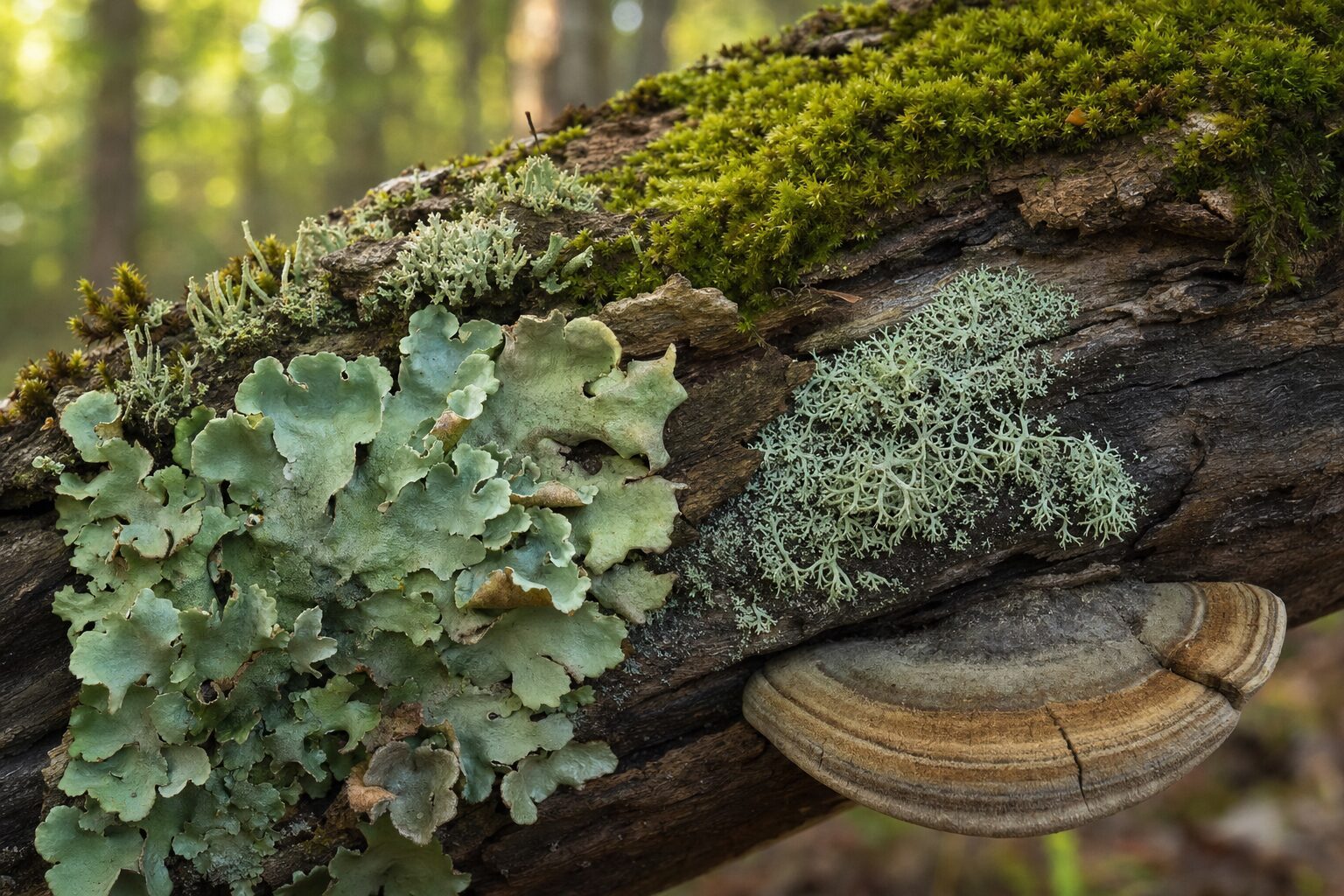
Short definitions of the technical terms that appear on this site.
The most common questions about old and veteran trees — and answers that dispel widespread myths.
An old tree hides dozens of microhabitats — cavities, fungi, cracks, nests. Find them, identify who lives inside, and collect the whole set. Your score goes on the leaderboard.
Across 10 rounds we show you illustrations of real tree-related microhabitats (TreMs) from old trees. Your task: click precisely on the microhabitat and guess which species lives in it.
Which species lives in this microhabitat? A correct choice doubles the round's points.
Microhabitat and species data are based on: Bütler R., Lachat T., Krumm F., Kraus D., Larrieu L. (2024) Field Guide to Tree-related Microhabitats. Descriptions and size limits for their inventory in temperate and Mediterranean forests. 2. izd. Birmensdorf: Swiss Federal Institute for Forest, Snow and Landscape Research WSL, 64 str. Dostupno na: wsl.ch/fg-trems. Tipologija: Larrieu et al. (2018) Ecological Indicators 84: 194–207.
Selected news, discoveries and scientific papers on old, ancient and veteran trees from Croatia, Europe and the world.
Trusted European and British initiatives for recognising, recording and protecting old and veteran trees.
An annual award celebrating trees with a story and encouraging communities across Europe to protect them.
treeoftheyear.orgA professional network dedicated to the biology, conservation and management of ancient and veteran trees.
ancienttreeforum.org.ukThe largest database of old and veteran trees — recorded by Woodland Trust volunteers.
ati.woodlandtrust.org.ukThe leading professional body for arboriculture — standards, education and good-practice guidance.
trees.org.uktree.vet is an educational project by Arboring, an arboricultural practice specialising in the diagnostics, assessment and protection of old and veteran trees. Behind every page is hands-on fieldwork — from individual trees to urban green spaces.
Learn more about Arboring